When planning a trip to the ancient Nabataean city, many travelers ask: do you need a tour guide in Petra? The brief answer is that official regulations do not require you to hire someone, meaning you can enter and walk through the site independently. However, whether a guide is necessary in Petra depends on your time constraints, physical fitness, interest in archaeology, and personal preference for navigation.
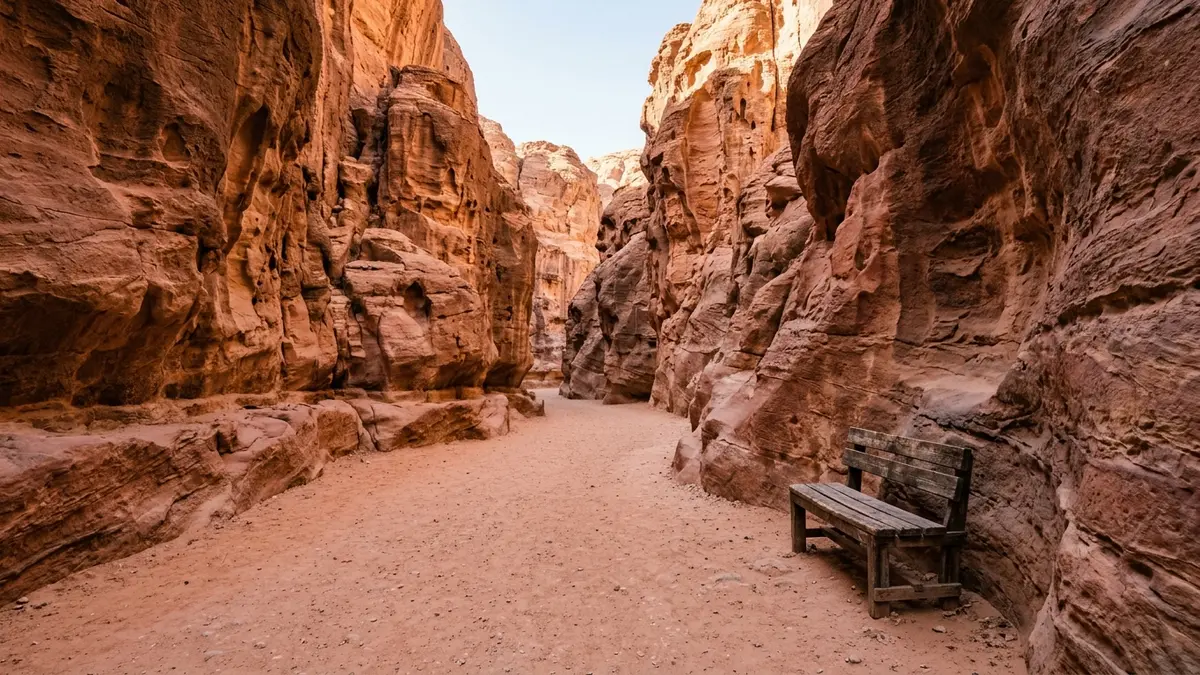
Short answer
You are not legally required to hire a guide to enter Petra. You can buy your entry ticket at the visitor center, pass through the gates, and explore the main trails on your own. For travelers who simply want to see the Treasury, walk through the Siq, and take photos along the paved and gravel paths, exploring without assistance is straightforward.
However, asking “do I need a guide in Petra” involves more than just entry rules. Petra spans over 260 square kilometers, featuring hundreds of carved tombs, complex water conduits, ancient ceremonial places, and secondary mountain trails. Without someone to explain the context, the rock carvings remain impressive stone structures without a clear narrative. A guide helps you understand Nabataean engineering, spot minor details on the facade walls, manage your time efficiently, and navigate secondary paths safely.
Whether a Petra guide is necessary comes down to your goals for the day:
- Independent visit: Best for travelers on a tight budget, return visitors, or those who prefer walking at a relaxed pace with a printed map or guidebook.
- Guided visit: Best for first-time visitors, short itineraries, travelers seeking detailed historical background, non-English speakers requiring specific language support, or those attempting difficult mountain hikes.
At jordantourism.net, we operate as an independent arrangement service. We help travelers connect with available private guides who are licensed according to Jordanian requirements, tailored to their specific route, language, dates, and group size. If you want to discuss options for your trip, send your details—including travel dates, language preference, group size, and planned starting point—via WhatsApp or phone call.
Can you visit Petra without a guide?
Yes, you can visit Petra without a guide. Thousands of visitors enter the park every day on an independent basis. The main trail from the visitor center through the Siq to the Treasury, the Street of Facades, the Theater, and the Royal Tombs is wide, clearly defined, and easy to follow.
Entrance Procedures and Site Access
When you arrive in Wadi Musa, you proceed to the main Petra Visitor Center. Here, you present your passport and purchase your ticket or show your Jordan Pass. Official ticket rules and park opening hours are published directly by the Petra Development and Tourism Region Authority.
Once inside the turnstiles, you walk down the open valley known as Bab Al Siq before entering the narrow gorge of the Siq itself. You do not need anyone to direct you through this portion of the site. The canyon path leads directly to Al-Khazneh (the Treasury). From there, the path opens up into the main valley toward the ancient city center.
Trail Conditions and Navigation Signs
The main axis of the site has clear signposts marking major monuments, including the Great Temple, the Church, and Qasr Al-Bint. Small information boards stand outside the principal structures, providing basic summaries of their history and construction in English and Arabic.
If you stay on the primary valley floor, getting lost is nearly impossible. The terrain is largely gravel, paved stones, or sand. However, side trails—such as the climb to the High Place of Sacrifice, the Al-Khubtha trail leading to the Treasury view from above, or the path to Ad-Deir (the Monastery)—involve hundreds of uneven stone steps cut into the rock face. While these paths are heavily traversed, they have fewer directional signs, and route markers can occasionally be confusing for first-time hikers.
Safety and Local Interaction
Navigating Petra without a guide means managing your own encounters with local vendors, camel or donkey handlers, and souvenir sellers. While park rangers patrol the main routes, walking independently requires you to set firm boundaries if you are offered unwanted rides or unofficial vantage points.
If you plan to explore remote outer trails, such as the back exit toward Little Petra or lesser-known peaks like Jabal Haroun, going unsupported is not recommended due to limited cell phone signal and steep cliff edges.
What you usually miss without one
Exploring Petra independently allows you total freedom over your schedule, but it also means relying entirely on written markers or self-guided reading. The physical scale of Petra can make it difficult to identify important historical engineering features that are hidden in plain sight.
Nabataean Engineering Details
The Nabataeans built Petra in an arid desert basin subject to violent winter flash floods. Without detailed historical context, most visitors walk past key structural innovations without realizing their purpose:
- The Dam and Diversion Tunnel: Located right at the entrance of the Siq, this system diverted floodwaters away from the narrow canyon to protect merchants and travelers entering the city.
- Terracotta Water Pipes: Running along both walls of the Siq, these carved channels and clay pipes carried clean spring water from Ayn Musa into the city center using gravity and precise elevation control.
- Quarry Marks and Scaffold Holes: On the unfinished facades, subtle notch marks show how stonemasons carved tombs from the top down, using the natural cliff rock as their scaffolding.
- Triclinia and Banquet Halls: Many dark openings in the rock look like simple caves, but were actually formal dining rooms used for ancestral memorial feasts.
Time Management and Route Efficiency
Petra is massive. A common mistake for independent travelers is spending three hours exploring the early monuments near Bab Al Siq and the Street of Facades, leaving them exhausted by noon before they reach the main city center, the Museum, or the Monastery.
A dedicated guide structures the walk based on your energy levels and available hours. They adjust the walking speed, factor in rest stops at shade points, and ensure you do not spend unnecessary energy on secondary paths that offer limited historical value for short visits.
Cultural Etiquette and Local Insights
A private guide acts as a bridge between visitors and the local Bedouin community living around Bedul and Ammarin villages. They explain local traditions, clarify fair pricing for tea or crafts, and help you navigate interactions with animal handlers smoothly. They also explain the modern history of Petra, including how local families lived inside the caves until their relocation to Um Sayhoun in the 1980s.
When a guide is clearly worth it
While an independent visit is fully feasible, hiring a specialized local professional becomes a practical decision under specific travel circumstances.
1. First-Time Visitors with Short Itineraries
If you have only one day or a single morning to see Petra, having someone manage your route is invaluable. They take you directly to the key sites, explain the essential history, point out subtle architectural details, and help you reach your preferred viewpoints without wrong turns. If you want to arrange a specialized route, booking a Private guide for Petra ensures your schedule matches your physical capabilities and time limits.
2. Specific Language Requirements
While many vendors speak basic conversational English, detailed architectural and historical commentary requires fluency. If you or your family prefer tours conducted in French, German, Spanish, Italian, Russian, or other non-English languages, booking a guide in advance is essential. Finding a specialized non-English-speaking guide on short notice at the visitor center entrance can be difficult during peak tourist seasons.
3. Travelers with Mobility Constraints or Specific Pacing Needs
Walking through Petra involves covering long distances over rough stone, soft sand, and uneven stairways. Standard group tours often move at a rigid pace that may be too fast or too slow for individual needs. A dedicated private guide adjusts the walk to your speed, identifies accessible alternative paths where possible, locates rest areas with bench seating, and helps you avoid unnecessary climbs.
4. Deep Historical and Archaeological Interest
If you want to understand the distinctions between Nabataean, Roman, Byzantine, and Islamic architectural influences across the site, written panels on site offer only surface-level summaries. A guide answers specific questions about trade routes, incense commerce, burial rites, and modern archaeological excavations currently taking place across the lower valley.
When you can skip it
Hiring a guide is not mandatory, and for certain styles of travel, going without one offers a better personal experience.
1. Repeat Visitors
If you have already visited Petra before and understand the general geography between the Siq, the Treasury, and the Museum, you do not need someone to walk you down the main path. A second or third visit is often best spent exploring independently, taking time to draw, photograph, or simply sit and observe the changing light on the sandstone walls.
2. Travelers on Strict Budgets
If minimizing costs is your main priority, you can safely skip hiring a guide. By preparing in advance—reading detailed guidebooks, downloading offline maps, and reviewing site history before arrival—you can navigate the main trails comfortably without spending extra funds.
3. Landscape Photographers and Solo Explorers
Photographers often require long periods at a single location waiting for lighting conditions to shift across a carved facade. Having a guide waiting alongside can create a feeling of being rushed. If your goal is to spend two hours photographing the details of the Royal Tombs or the Treasury, an independent walk gives you full control over your timetable.
Guide vs no guide: comparison
To decide whether a guide is necessary in Petra for your specific trip, review how the experience differs across key categories:
| Decision Factor | Independent Visit (No Guide) | Guided Visit (Private Guide) |
|---|---|---|
| Navigation & Trail Finding | Must rely on maps and signposts; easy on the main trail, challenging on mountain routes. | Fully managed route; no risk of wrong turns or missed trailheads. |
| Historical Context | Limited to entrance boards, printed books, or phone audio guides. | Direct, interactive commentary; custom answers to specific historical questions. |
| Time Management | Risk of spending too much time early in the day; potential backtrack. | Structured timetable tailored to your departure time and physical energy. |
| Interaction with Vendors | You handle all offers for animal rides, souvenirs, and tea independently. | Guide helps manage unsolicited offers and facilitates respectful local interactions. |
| Language Options | Dependent on personal reading material; signboards are in English and Arabic. | Commentary available in your native language (English, French, German, Spanish, etc.). |
| Cost Control | Pay only park entrance ticket and personal spending. | Requires budgeting for professional guide fees alongside park entry fees. |
| Pace Control | Total personal freedom to stop, sit, photo-graph, or change direction anytime. | Flexible with a private guide, but structured around an agreed itinerary. |
The middle option: a guide for part of the day
You do not have to choose between full-day guidance and going entirely unsupported. A common approach chosen by experienced travelers is hiring a guide for the primary morning orientation and spending the afternoon exploring independently.
How a Half-Day Guidance Setup Works
Under this arrangement, you meet your guide at the Petra Visitor Center in the morning. They lead you through Bab Al Siq, down the Siq, past the Treasury, along the Street of Facades, and through the main colonnaded street down to the Great Temple and the Petra Museum near Qasr Al-Bint.
During this 2.5 to 3.5-hour period, you receive complete historical commentary, site orientation, and answers to your archaeological questions.
Once you reach the museum area in the lower valley, the guided portion concludes. You then have the remainder of the day to:
- Hike up the 800-plus steps to Ad-Deir (the Monastery) at your own speed.
- Climb up to the Royal Tombs and explore the Byzantine mosaics inside the Petra Church.
- Sit at a local tea tent to rest before taking the long walk back through the Siq.
This split approach provides historical depth when entering the site while granting complete personal freedom for mountain hikes later in the day. Understanding how fees are structured across half-day and full-day schedules helps you budget effectively; you can read more about pricing structures in our overview of Tour guide cost.
If you would like to arrange a private guide for part of your visit, send your dates, expected arrival time, group size, and preferred language via WhatsApp or call.
Decide in one minute
If you are still weighing whether a Petra guide is necessary for your visit, use this quick checklist to make your decision:
-
Choose a Private Guide if:
- This is your first time in Petra and you have less than 6 hours to spend at the site.
- You are traveling with family members or elderly companions who need a carefully managed walking pace.
- You want detailed historical commentary in a language other than English.
- You want to avoid studying maps while walking and prefer clear direction.
- You are planning a broader trip across the country and want consistency by arranging a Private tour guide in Jordan for multiple days.
-
Choose an Independent Visit if:
- You have two or three full days to explore Petra and want to wander without a schedule.
- You are on a strict travel budget and prefer using self-study materials or books.
- Your primary goal is landscape photography, requiring long stops at individual monuments.
- You have visited Petra previously and already know the main valley layout.
To understand how Petra fits into wider travel planning, site requirements, and logistics across the country, see our primary guidance page on Do you need a guide in Jordan?. You can also review official tourism background details through the Jordan Tourism Board.
Transport Options: Depending on your plan and availability, airport pickup (e.g. Queen Alia International Airport), hotel pickup/drop-off, and transport by car with a driver between sites can be arranged together with your guide, confirmed after your WhatsApp message or call.
FAQ
Is it worth getting a guide in Petra?
Yes, getting a guide in Petra is worth it for most first-time visitors who want deep historical context, efficient route timing, and smooth navigation through the massive archaeological park. A guide brings stone structures to life by explaining Nabataean engineering, religion, and trade history that you might otherwise walk past. However, if you are a repeat visitor or prefer self-guided exploration with a book, visiting independently is also completely feasible.
Is a guide mandatory in Petra?
No, a guide is not mandatory in Petra. Visitors are free to purchase their entry tickets at the visitor center and explore the main trails and monuments independently. You are only required to show valid entry documentation at the gate turnstiles.
Can I hire a guide for part of the visit?
Yes, you can hire a guide for part of your visit, such as the main trail route from the Visitor Center down to the Petra Museum in the city center. This usually takes around 3 hours, after which you can spend the rest of your day exploring secondary trails like the Monastery or High Place of Sacrifice on your own.
Is Petra easy to navigate alone?
Petra is easy to navigate alone if you stick to the Main Trail running from the Visitor Center through the Siq, past the Treasury, and along the valley floor to Qasr Al-Bint. The primary route is wide and heavily marked. Secondary mountain trails, such as the climb to Al-Khubtha viewpoint or the back trail from Little Petra, are more rugged and harder to follow without guidance or clear offline maps.
Do I need a guide for the Monastery trail?
You do not strictly need a guide for the main trail leading up to the Monastery (Ad-Deir). The path consists of roughly 800 rock-cut stone steps starting near the Petra Museum, and there are tea stalls and other hikers along the way. However, having a guide can help you maintain a safe pace, find shade stops, and learn about the ancient procession route as you ascend.
How do I check if a tour guide is officially credentialed?
When hiring a guide directly at local sites, you can ask to see their professional credentials issued by the ministry or local tourism authority. You may verify site licenses and guide credentials directly with site administration offices at the Visitor Center prior to commencing your tour.
How do I arrange a private guide in advance through your service?
To arrange a private guide in advance through our independent service, send us your travel details via WhatsApp or phone call. Include your travel date, starting time, preferred language, total group size, and planned route. We will check availability for your dates and confirm what can be arranged.
Need a Private Guide in Jordan?
Send us these details on WhatsApp to check availability and pricing:
- Preferred language
- Travel dates
- Number of travelers
- Planned route
- Hotel or flight arrival